
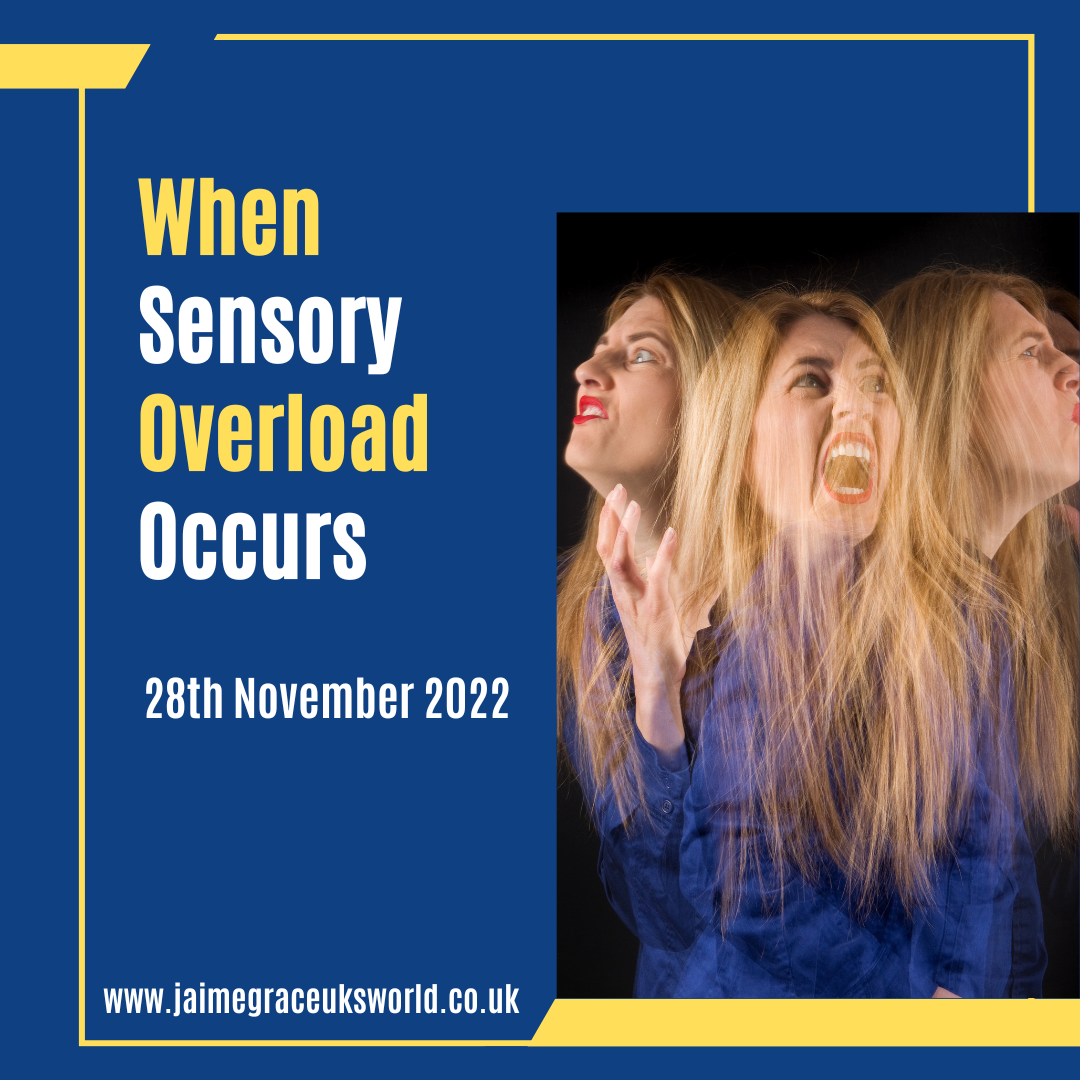
This can happen when your senses are being overly stimulated in your current environment. Sensory overload can happen when your environment is particularly busy, noisy or when your brain can’t take in as much sensory information.
When does sensory overload occur?
This can happen anytime day or night. This can happen slowly over time but can happen suddenly. Losing a sensory ability can enhance other sensory areas for example: being in the dark where there is no light, this may enhance sound sensors to be stronger. This can cause panic attacks or elevated anxiety.
Ideas of how you can help someone when sensory overload occurs?
Try and find out what has triggered the sensory overload and make the environment as calm as possible by turning things off, turning the heating on/off, adjust lighting, reassure them you are there to help. If this cannot be achieved removing them from the situation to a quieter area may help them.
Ideas of how you can cope when sensory overload occurs?
If you know what your triggers are you can seek support; use your sensory items; remove yourself from the situation to where you feel safe and calmer; do what you need to do.
How to avoid sensory overload occurring?
Every person has different sensory issues so ask them what they are and help them to prevent sensory overload. They may have their own equipment to prevent sensory overload like ear defenders or sunglasses. Making them aware of available support will help.
What items help/cope with sensory overload?
For example: weight blanket, Chewey’s, soft toys, ear plugs/defenders, fidget toys, music.
Important notes
Sensory overload or when sensory needs are not met this can cause meltdowns, burnouts and shutdowns. Behaviour may change rapidly before and after.
Sensory needs/seeking and sensory overloads are known to be more common with autistic people, but this is not the case. Other neurodivergent people can experience this as it is unique and individual.


Leave a Reply